
Orange Stool: Common Causes and When to Worry
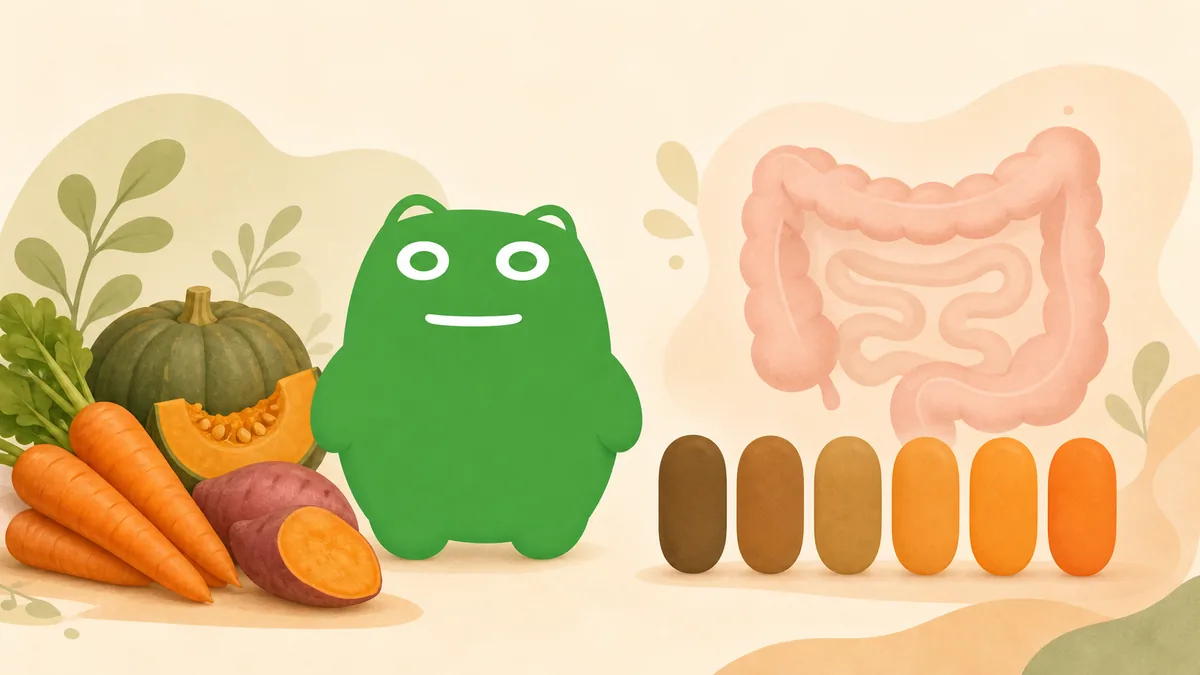
Orange stool most often reflects what you recently ate, especially deeply colored vegetables or food dyes. Faster movement through the intestine can also leave more yellow-orange bile pigment in stool. Color by itself cannot identify a disease, so look at texture, duration, recent foods, medicines, and other symptoms before deciding what the change means.
Why stool can turn orange
Stool gets its usual brown color from bile pigments that change as material travels through the digestive tract. When transit is faster than usual, those pigments may have less time to become brown. Loose or urgent stool can therefore look yellow, greenish, or orange even when the original trigger is temporary.
Food is an even more common explanation. Carrots, sweet potatoes, pumpkin, winter squash, and products with orange or red coloring may tint stool. A large portion or several colored meals in a row can make the change more obvious. The color usually returns to normal after the pigments pass through your system.
Supplements and medicines can affect stool appearance too. Rather than stopping a prescribed medicine on your own, check its information and ask a pharmacist or clinician whether the change is expected. Note any new antacids, vitamins, supplements, or medicines that started shortly before the color appeared.
Orange, pale, or greasy stool
It helps to distinguish bright orange-brown stool from stool that is unusually pale, gray, or clay colored. Very pale stool may mean that less bile is reaching the intestine and deserves medical review, especially when it repeats. Lighting and toilet water can distort color, so record the closest description you can without relying on one isolated look.
Texture also matters. Orange stool after a colorful meal is different from repeated light-colored stool that looks oily, floats often, leaves a film, smells unusually strong, or is difficult to flush. Those features can occur when fat is not being absorbed normally. They do not reveal the cause, but a clinician may want to evaluate a persistent pattern.
Do not start a highly restrictive diet based on color alone. Removing many foods at once makes it harder to identify a trigger and may reduce nutrition unnecessarily. A simple record is more useful than a quick diagnosis.
What to track for a clearer pattern
Write down when the color started and whether each bowel movement is formed, loose, hard, oily, floating, or unusually pale. Record recent foods and drinks, including strongly colored ingredients, plus supplements and medicines. Add bowel frequency, urgency, abdominal pain, nausea, fever, appetite, and weight changes.
Compare several bowel movements rather than treating one event as a trend. If the color disappears after a suspected food leaves your diet and returns after you eat it again, that pattern is useful. If it continues regardless of meals, bring the timeline to a healthcare professional.
Hydration can also affect the overall picture. Diarrhea may increase fluid loss, while dark urine and reduced urination can suggest dehydration. Sip fluids regularly during a brief loose-stool episode and seek advice if you cannot keep fluids down.
When to seek medical care
Get prompt medical help for black or tarry stool, visible blood, severe or worsening abdominal pain, repeated vomiting, high fever, fainting, confusion, jaundice, or very low urine output. Jaundice with dark urine and pale stool needs timely assessment.
Contact a clinician if an unexplained orange or pale color keeps returning, lasts several days, or comes with greasy stool, weight loss, persistent diarrhea, poor appetite, or ongoing pain. Personal risk varies with age, medical history, and medicines. This article is general information, not medical advice.
How bellySignal helps
A timeline can show whether orange stool followed a particular food, a medicine change, or faster bowel movements.
Your diary is stored on your device, and no account is required. Selected health values, including stool type, symptoms and manually entered weight, are also sent to PostHog and Firebase Analytics. Both services are enabled by default. The analytics switch controls PostHog only; Firebase Analytics remains active. Privacy policy.
Frequently asked questions
- What foods can make stool orange?
- Carrots, sweet potatoes, winter squash, and foods containing orange or red coloring can temporarily change stool color. The effect should fade after the food leaves your system.
- Can supplements cause orange stool?
- Some supplements and medicines can change stool color. Check the product information and ask a pharmacist or clinician if the change persists or you are unsure.
- When should orange stool be checked?
- Seek care if it is repeatedly pale or greasy, or occurs with jaundice, dark urine, severe pain, fever, vomiting, blood, black stool, or unexplained weight loss.
Sources
bellySignal provides general wellness information and does not replace professional medical advice or diagnosis.