
Red Stool After Beets: Food Color or Blood?
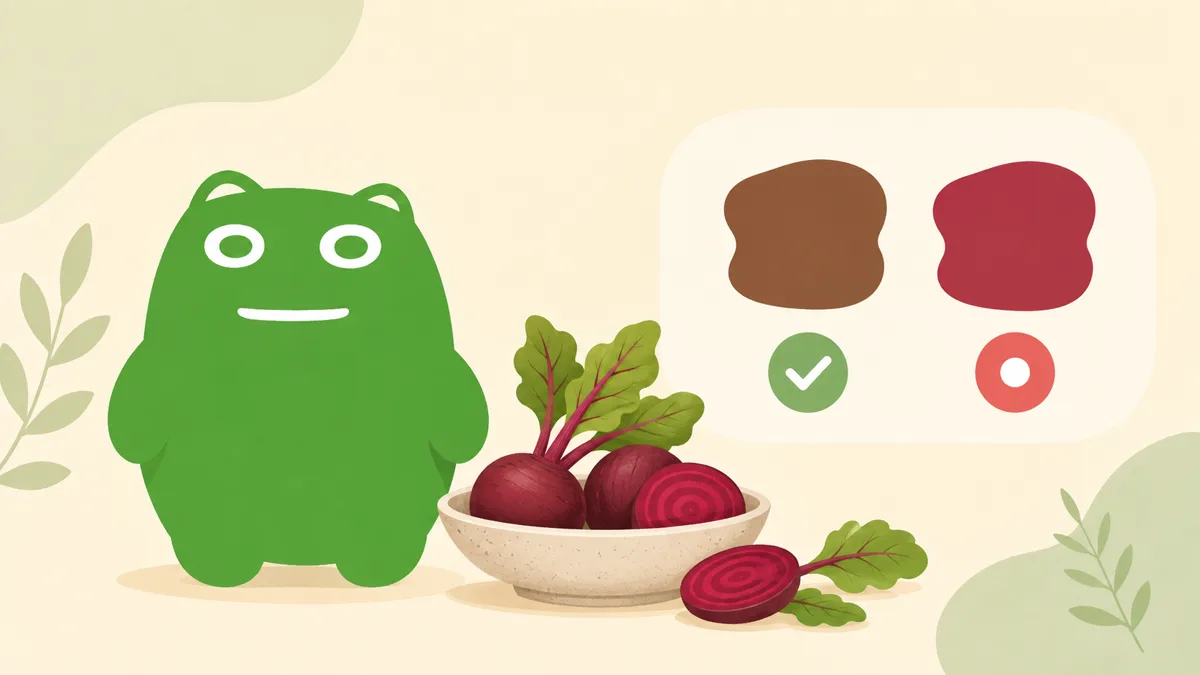
Red stool after beets is often a food color effect, not bleeding. Beet pigment can tint stool, toilet water, and sometimes urine red or pink. The useful question is whether the timing fits the beet meal, and whether any signs point to blood instead.
The quick answer
If you ate beets, beet juice, beet powder, or a red-colored food recently, a short-lived red or pink stool can be harmless. It is more reassuring when the color starts after that meal and then returns toward your usual color.
It is less reassuring when red stool appears without a clear food reason, keeps happening, looks like blood on the paper or in the bowl, or comes with symptoms. Bright red blood can come from the rectum or anus, while darker red, maroon, black, or tarry stool can suggest bleeding from higher in the digestive tract. When in doubt, treat possible blood as a medical question.
Why beets can turn stool red
Beets contain red-purple pigments that can survive digestion in some people. When those pigments leave through stool or urine, the result can look dramatic even though it is food pigment.
This is narrower than a stool color guide. You noticed red stool after beets and want to decide whether the timing fits food pigment or whether the pattern needs care.
Timing checklist after a beet meal
Use this checklist before you jump to conclusions.
- Did you eat beets, beet juice, beet powder, red gelatin, red drinks, or another strong red dye?
- Did the red color start after that food, rather than before it?
- Is the color fading as you have more bowel movements?
- Do you also notice pink or red urine, which can happen with beet pigment?
- Do you feel otherwise well, without belly pain, rectal pain, dizziness, weakness, fever, or vomiting?
- Is there no repeated bleeding on toilet paper, no clots, and no black sticky stool?
If the answers mostly fit, logging the episode and watching the next bowel movements is reasonable. If they do not fit, or you cannot connect the color to food, contact a clinician.
Clues that suggest blood instead
Blood is more likely when red appears as fresh streaks on toilet paper, drips into the bowl, coats one side of a hard stool, or repeats with straining and rectal pain. That can happen with hemorrhoids or a small anal tear, but repeated bleeding deserves attention.
Red or maroon color mixed through stool can be more concerning because it may come from bleeding higher in the colon. Black, sticky, tar-like stool is a separate warning sign because blood can darken as it travels through the gut. Iron, bismuth medicines, and dark foods can also darken stool, but black tarry stool should be checked promptly unless a clinician has already explained it.
Texture and symptoms matter. Beet pigment usually changes color without making you feel ill. Blood-related problems may come with pain, diarrhea, fever, weakness, lightheadedness, weight loss, or a bowel pattern change.
Red flags: when to get care
Seek medical advice promptly if any of these apply.
- Red stool without beets, red dye, or another clear food trigger
- Red color that persists or keeps returning
- Blood on toilet paper, clots, or blood dripping into the bowl
- Black, tarry, sticky, or very dark stool
- Dizziness, faintness, weakness, or a racing heart
- Severe or ongoing belly pain or rectal pain
- Fever, vomiting, unexplained weight loss, or a lasting change in bowel habits
Seek urgent care for heavy bleeding, black tarry stool with weakness or dizziness, or feeling faint. This article is general education, not medical advice. A clinician can decide whether it is food pigment, hemorrhoids, a fissure, inflammation, infection, or another cause.
How bellySignal helps
In bellySignal, you can log stool color, Bristol stool type from 1 to 7, and a blood or mucus flag. You can add beets as a food trigger, note when you ate them, and record whether the next bowel movements faded back to normal.
The app also lets you track urine color hydration from 1 to 8 and water intake in cups or mL, which helps you see whether hard stool and straining might be part of the story. Notes let you record supplements, medicines, or pain without mixing every red episode into one vague memory.
Your diary is stored on your device, and no account is required. Selected health values, including stool type, symptoms and manually entered weight, are also sent to PostHog and Firebase Analytics. Both services are enabled by default. The analytics switch controls PostHog only; Firebase Analytics remains active. Privacy policy.
Frequently asked questions
- How long can stool stay red after eating beets?
- It can last until the beet pigment has passed through your gut, so timing varies with your normal bowel pattern. A known beet meal followed by a temporary red or pink tint is more reassuring than red stool that continues or appears without beets.
- Can beets make stool look like blood?
- Yes. Beets can tint stool, toilet water, or urine red or pink, which can look alarming. Blood is more concerning when it appears as streaks, clots, repeated bleeding, black tarry stool, or red color mixed with symptoms.
- When should I call a doctor about red stool after beets?
- Call a doctor if the red color keeps returning, lasts after beet pigment should have passed, appears without beets or red dye, or comes with belly pain, rectal pain, dizziness, weakness, black tarry stool, weight loss, or a lasting bowel habit change.
Sources
bellySignal provides general wellness information and does not replace professional medical advice or diagnosis.