Bladder Irritant Foods and Drinks: What to Track
This article compares four NIDDK and NHS pages: two on interstitial cystitis, also called bladder pain syndrome, and two on bladder control and leaks. Their lists overlap a lot, but none says every item bothers everyone. The useful question is which of them bothers you.
Who lists what
| Food or drink | Where it shows up |
|---|---|
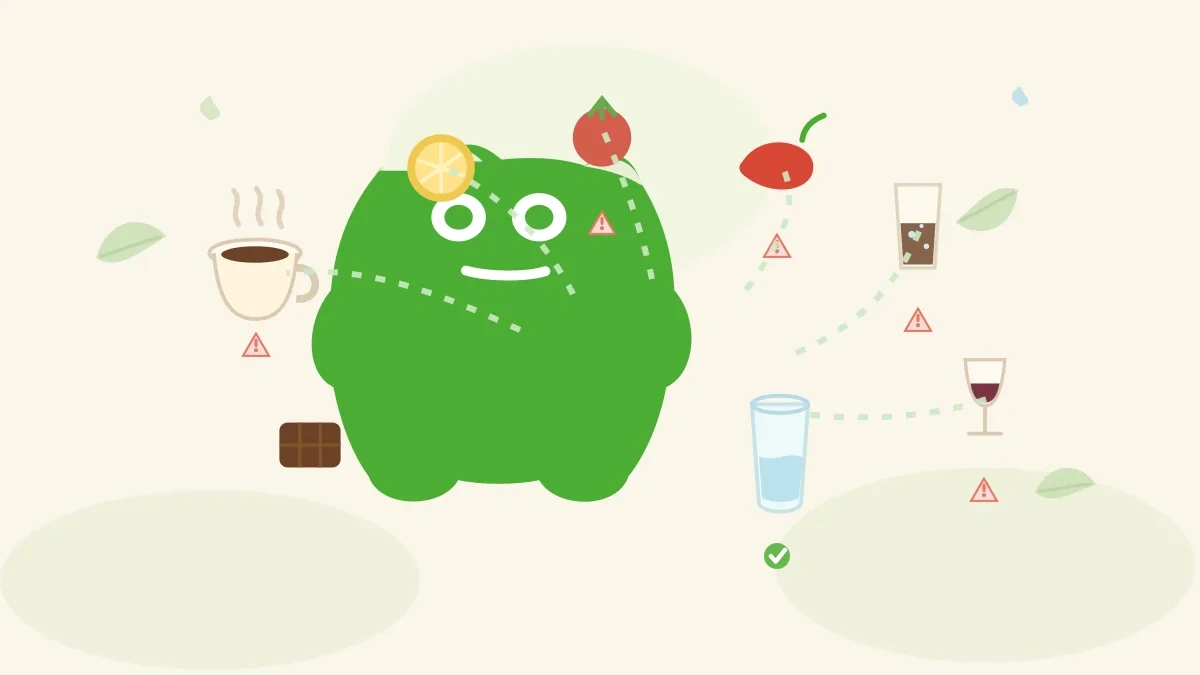
| Coffee, tea | NIDDK (interstitial cystitis), NHS (urinary incontinence and bladder pain syndrome), NIDDK (bladder control) |
| Soda and cola | NIDDK (interstitial cystitis), NHS (urinary incontinence, cola), NIDDK (bladder control, carbonated drinks with caffeine) |
| Alcohol | NIDDK (interstitial cystitis), NHS (both pages), NIDDK (bladder control) |
| Citrus juices such as orange and grapefruit | NIDDK (interstitial cystitis), NHS (bladder pain syndrome, acidic food like citrus fruits) |
| Tomatoes and tomato sauces | NIDDK (interstitial cystitis, high-acid foods) |
| Hot and spicy food | NIDDK (interstitial cystitis), NHS (bladder pain syndrome) |
| Artificial sweeteners | NIDDK (interstitial cystitis) |
| Chocolate | NIDDK (interstitial cystitis), NIDDK (bladder control, as a caffeine source) |
| MSG | NIDDK (interstitial cystitis) |
| Energy drinks | NHS (bladder pain syndrome) |
Caffeinated drinks and alcohol appear on all four pages. The NHS urinary incontinence page says they can make your kidneys produce more urine and irritate your bladder. NIDDK’s bladder control page says limiting caffeine may help reduce leaks and that alcohol can increase how much urine your body makes.
The wording is also mild. The NHS bladder pain syndrome page says not to have “too much” of these, rather than cutting them out completely.
Finding your own triggers
NIDDK suggests a food diary. Its example is a diary that shows flares after tomatoes or orange juice. The NHS gives the same advice for bladder pain syndrome, noting that some foods and drinks can make you pee more.
A made-up week of notes might look like this:
| Day | What you had | Bladder notes |
|---|---|---|
| Mon | 1 coffee with breakfast | Nothing unusual |
| Tue | 3 coffees, cola at lunch | Up twice in the night, urgent in the afternoon |
| Wed | 1 coffee, pasta with tomato sauce | Nothing unusual |
| Thu | 1 coffee, 2 glasses of wine | Urgent in the evening |
| Fri | 1 coffee | Nothing unusual |
One coffee on its own doesn’t line up with symptoms here, but the days with more caffeine or alcohol do. The tomato day doesn’t. A single week can’t prove that, so keep logging and see whether the same pairing comes back. NIDDK also suggests working with a registered dietitian, if possible, before you build an eating plan around it.
Write down roughly how much water you drink as well. NIDDK’s interstitial cystitis page says staying hydrated may help, and the NHS says a GP can advise how much to drink for your bladder problem. If you get up at night to pee, the NHS suggests drinking less in the hours before bed while still drinking enough during the day.
When it isn’t the food
New urgency or burning can be an infection. The NHS lists pain or burning when peeing, needing to pee more often or more suddenly, cloudy pee, blood in your pee, lower tummy pain or pain in your back just under the ribs, and a high temperature among UTI symptoms.
- The NHS bladder pain syndrome page says to see a GP if pain in your bladder, lower tummy or back doesn’t go away or keeps coming back, or you are peeing much more than usual.
- The same page says to ask for an urgent GP appointment or contact NHS 111 if there is blood in your pee, or bladder, lower tummy or back pain with a very high temperature or feeling hot, cold and shivery.
- If you might have a UTI, the NHS UTI page gives a separate urgent list. Any one of these counts, and the list includes pain in the lower tummy or in your back just under the ribs, a very high or low temperature or shivering, blood in your pee, symptoms that get worse quickly or don’t improve within 48 hours of starting treatment or treating it yourself, or being pregnant, a man or assigned male at birth, aged 65 or older, or having diabetes.
- Call 999 or go to A&E if someone with a possible UTI is confused, drowsy or has difficulty speaking.
Outside the UK, see your doctor for the first point. For the second and third, get urgent medical advice. For the last, call your local emergency number straight away. This article is general information, not medical advice.
How bellySignal helps
In bellySignal you can log water in cups or mL, urine color on a 1 to 8 scale, and food or drink triggers such as coffee or alcohol, then add a note like “up twice at night” or “urgent after lunch.” Looking back over a few weeks shows whether those notes keep landing on the same days as a particular drink.
Your diary is stored on your device, and no account is required. Selected health values, including stool type, symptoms and manually entered weight, are also sent to PostHog, which is enabled by default. The analytics switch controls PostHog only. Firebase Analytics receives usage events without those health values and remains active. Privacy policy.
Frequently asked questions
- Which drinks are most often listed as bladder irritants?
- Caffeinated drinks and alcohol appear in all four of the NIDDK and NHS pages compared here. NIDDK lists coffee, tea, soda, alcohol and citrus juices such as orange and grapefruit among foods and drinks that cause flares for some people with interstitial cystitis. The NHS names tea, coffee and cola for urinary incontinence and says caffeine and alcohol can make your kidneys produce more urine and irritate your bladder.
- Do I have to cut out every food on the list?
- The guidance is narrower than that. NIDDK says some people find certain foods cause flares and suggests a food diary to see which ones affect you. The NHS page on bladder pain syndrome says not to eat too much spicy or acidic food and not to have too much alcohol or caffeine. NIDDK also suggests working with a registered dietitian, if possible.
- How do I tell a food reaction from a urine infection?
- A diary can't make that call. The NHS lists burning when you pee, needing to go more often or more urgently, cloudy pee, blood in your pee, lower tummy or back pain, and a high temperature as possible UTI symptoms. If you have these, get advice instead of changing your diet.
Sources
bellySignal provides general wellness information and does not replace professional medical advice or diagnosis.