
Constipation: Causes, Relief, and When to Worry
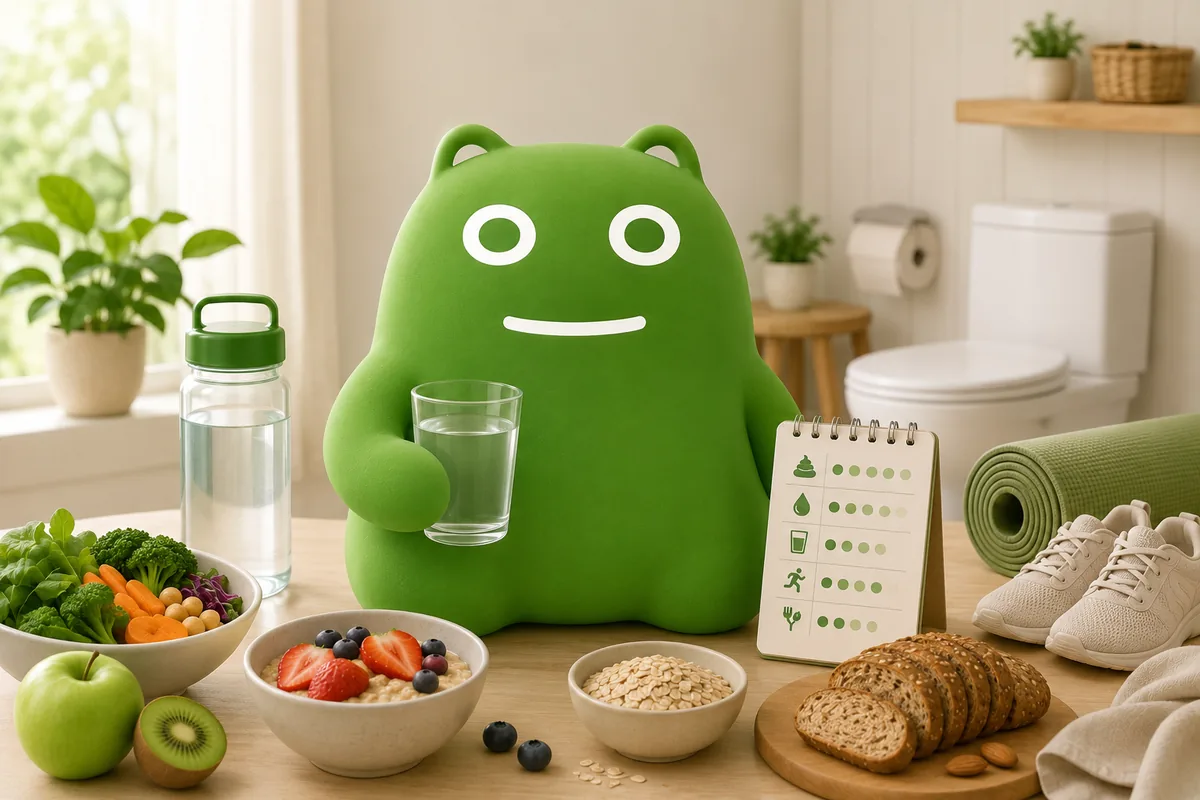
Constipation is one of the most common digestive complaints, and most of the time it is uncomfortable rather than dangerous. Knowing what counts as constipation, what tends to cause it, and how to ease it can take a lot of the worry out of a rough week.
The quick answer
Constipation is commonly defined as fewer than three bowel movements a week, with stool that is hard or lumpy and takes effort and straining to pass. It usually improves with more fiber, more fluids, and more daily movement. If it keeps coming back, lasts a long time, or arrives with warning signs like blood, weight loss, or severe pain, it is worth seeing a doctor.
What counts as constipation
Constipation is more than just how often you go. The usual markers are a low frequency (fewer than three bowel movements a week), stool that is hard or lumpy, straining, and a feeling that you have not fully emptied. On the Bristol Stool Chart, hard or lumpy stool maps to types 1 and 2, the dry end of the scale, where stool has spent too long in the colon and lost water.
Your own baseline matters as well. If you normally go once a day and suddenly drop to twice a week with hard, hard-to-pass stool, that change is meaningful even if the numbers alone do not look extreme.
Common causes
Most constipation comes from everyday factors rather than serious illness:
- Low fiber. Too few vegetables, fruit, whole grains, and legumes leaves stool with less bulk and softness.
- Not enough fluids. When you drink too little, the colon pulls more water from stool, making it harder and drier.
- Low physical activity. Movement helps keep the gut active, so sitting most of the day can slow things down.
- Ignoring the urge to go. Putting it off, again and again, can dull the natural signal and back things up.
- Travel or routine changes. New schedules, different food, and unfamiliar bathrooms often throw off your rhythm.
- Some medications. Certain painkillers, iron supplements, and other medicines can slow the bowel as a side effect.
How to find relief
Simple, steady habits help most cases:
- Increase fiber gradually. Build up vegetables, fruit, whole grains, and legumes over days, not all at once, so your gut can adjust without extra gas and bloating.
- Drink more water. Fluids and fiber work together, so more fiber without more water can backfire.
- Move more. A daily walk or other regular activity helps keep stool moving.
- Keep a regular routine. Give yourself unhurried time, often after a meal, and go when you feel the urge instead of holding it.
- Do not rely on laxatives long term. They can help in the short term, but leaning on them for weeks should be guided by a doctor rather than done on your own.
Give these changes a little time. Stool patterns shift over days and weeks, not minutes.
When to see a doctor
Most constipation eases with everyday care, but some signs need a professional look. See a doctor if you notice blood in your stool, unexplained weight loss, a sudden change in bowel habits that lasts, or severe pain. Constipation that does not improve with more fiber, fluids, and movement is also worth raising. This article is general information, not medical advice, so let a clinician interpret any red flag in your own situation.
How bellySignal helps
It is hard to spot what helps or hurts from memory alone. Seeing these entries side by side over days and weeks makes it easier to notice what eases or worsens your constipation, and to walk into a doctor’s visit with real detail instead of a fuzzy memory.
Your diary is stored on your device, and no account is required. Selected health values, including stool type, symptoms and manually entered weight, are also sent to PostHog and Firebase Analytics. Both services are enabled by default. The analytics switch controls PostHog only; Firebase Analytics remains active. Privacy policy.
Frequently asked questions
- What counts as constipation?
- A common definition is fewer than three bowel movements a week, with hard or lumpy stool (Bristol types 1 and 2), straining to pass it, and a feeling of incomplete emptying. Your own normal matters too, so a clear drop from your usual pattern counts.
- How can I relieve constipation naturally?
- Gradually add fiber from vegetables, fruit, whole grains, and legumes, drink more water, move your body more, and keep a regular toilet routine. Build fiber up slowly with extra fluids so you do not trade hard stool for bloating.
- When should I see a doctor about constipation?
- See a doctor if you notice blood in your stool, unexplained weight loss, a sudden lasting change in bowel habits, or severe pain. Constipation that does not improve with simple changes is also worth a check.
Sources
bellySignal provides general wellness information and does not replace professional medical advice or diagnosis.