
What Affects Stool Color: A Color-by-Color Guide
Stool color changes more often than most people expect, and the cause is usually something simple like a meal you ate the day before. Knowing which colors are ordinary and which ones deserve attention can save you a lot of worry, and help you act quickly on the rare occasions when it matters.
The quick answer
Normal stool is brown, and that color comes from bile, a digestive fluid your liver makes. Many color shifts are driven by food, food dyes, iron supplements, or medications, and they pass within a day or two. Green and yellow are often harmless. The colors to take seriously are black and tarry, bright red, or stool that stays pale or clay-colored, because these can point to bleeding or a problem with bile flow.
Why stool is normally brown
Your liver makes bile to help digest fats, and it flows into your small intestine with each meal. As bile moves through your gut, bacteria and enzymes break it down into pigments, mainly one called stercobilin, which gives stool its familiar brown shade. Healthy stool ranges across light to dark brown depending on your diet and how fast things move through you. Because brown depends on bile being made, released, and broken down normally, the color is a quiet sign that this whole system is working.
What changes the color
Several everyday factors can shift the color away from brown:
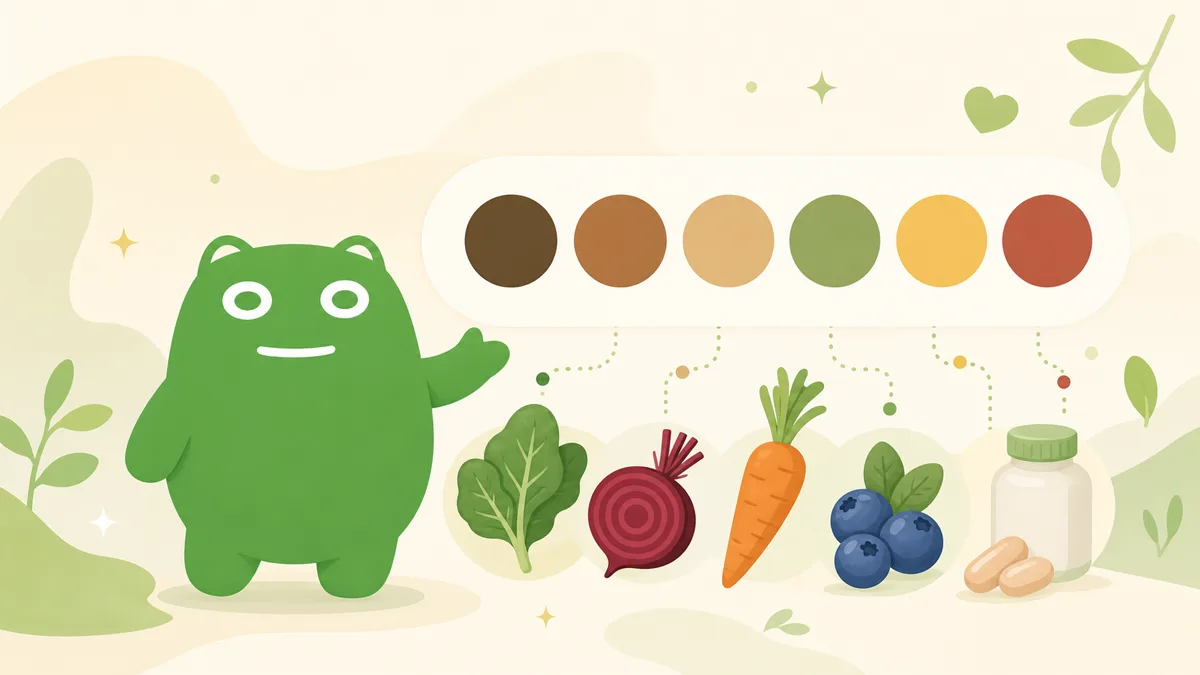
- Food and dyes. Leafy greens, beets, blueberries, black licorice, and brightly colored or artificially dyed foods can tint stool green, red, or very dark.
- Iron supplements. Iron commonly turns stool dark, sometimes nearly black. This is a known, harmless effect, though it can look similar to true bleeding.
- Medications. Some medicines, including certain antacids that contain bismuth, can darken stool. Bismuth-based products may even turn it black.
- Antibiotics. By changing the balance of gut bacteria that process bile, antibiotics can sometimes leave stool greener than usual.
- Faster transit. When stool moves through quickly, as during diarrhea, bile has less time to be fully broken down, so stool can come out green or yellow.
A color change that lines up with a new food, supplement, or medicine, and that fades once you stop, is usually nothing to worry about.
A color-by-color rundown
Green. Often from leafy greens, green food coloring, or faster transit during diarrhea, when bile has not finished breaking down. Usually harmless on its own.
Yellow or greasy. Yellow stool that looks greasy, smells foul, and is hard to flush can mean fat is not being absorbed well. An occasional episode is common, but if it keeps happening it is worth mentioning to a doctor.
Pale or clay-colored. Stool that is pale, gray, or clay-colored can mean little or no bile is reaching your gut, which may point to a problem with the bile ducts or liver. A one-off can follow certain medicines, but stool that stays pale should be checked.
Black or tarry. Black, sticky, tar-like stool can come from harmless causes like iron or bismuth, but it can also mean bleeding higher up in the digestive tract, where blood darkens as it travels down. If you are not taking iron or bismuth, treat black tarry stool as urgent.
Red. Bright red can come from beets or red food coloring, but it can also be blood from lower in the gut, the rectum, or hemorrhoids. Streaks on the surface or in the toilet water are worth attention, and a doctor should sort out the cause.
When to see a doctor
Most color changes are harmless and fade within a day or two. Some, though, are red flags that deserve prompt medical attention. Contact a doctor right away for black, tarry stool or bright red blood, since both can signal bleeding in the digestive tract. See a doctor as well if your stool stays pale, gray, or clay-colored, which can reflect a bile duct or liver issue. This article is general information, not medical advice, so let a clinician interpret any warning sign in your own situation.
How bellySignal helps
It is hard to remember whether last week’s color came from a meal or something more. With bellySignal you can log your Bristol stool type (1 to 7), your stool color, and any blood or mucus, alongside your urine color for hydration (a 1 to 8 scale), your water intake, food triggers, and free-text notes. Logging color next to the foods, supplements, and medicines you took makes it far easier to tell a diet-driven color from a real warning sign, and to give a doctor clear detail instead of a vague memory.
Your diary is stored on your device, and no account is required. Selected health values, including stool type, symptoms and manually entered weight, are also sent to PostHog and Firebase Analytics. Both services are enabled by default. The analytics switch controls PostHog only; Firebase Analytics remains active. Privacy policy.
Frequently asked questions
- Why is my stool normally brown?
- Brown comes from bile, a fluid your liver makes to help digest fat. As bile travels through your gut, bacteria and enzymes break it down into pigments that turn stool brown. Most healthy stool falls somewhere in the brown range.
- Which stool colors are a warning sign?
- Black tarry stool, bright red blood, and stool that stays pale or clay-colored are the colors to take seriously. Black and red can signal bleeding in the digestive tract, and lasting pale stool can point to a problem with bile flow. Any of these is a reason to contact a doctor.
- Can food really change my stool color?
- Yes. Leafy greens can turn stool green, beets can tint it red, and strongly colored or dyed foods like black licorice or blueberries can darken it. These changes usually clear within a day or two once the food passes through, with no other symptoms.
Sources
bellySignal provides general wellness information and does not replace professional medical advice or diagnosis.