
Gas After Eating Beans: Why It Happens
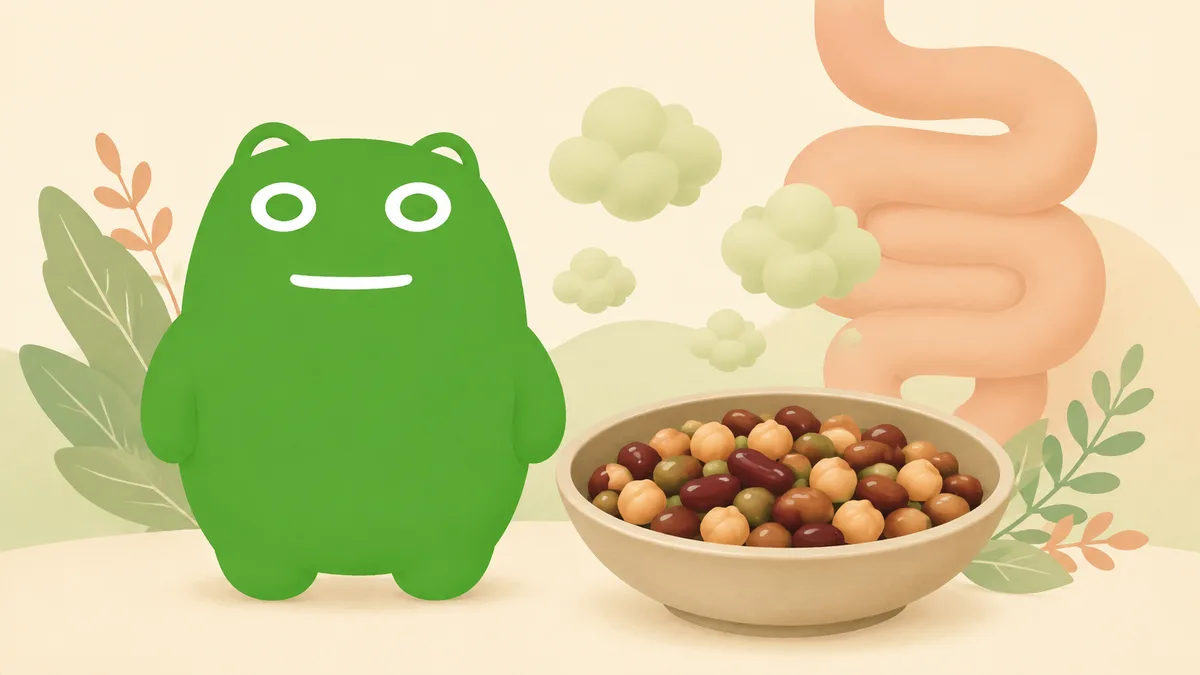
Gas after eating beans is usually related to fermentable carbohydrates and fiber. Some bean carbohydrates are not fully broken down in the small intestine. When they move into the colon, gut bacteria ferment them and gas is produced. This is normal, but it can feel uncomfortable after a larger portion or when constipation makes gas harder to pass.
Why beans can make gas
Beans are rich in fiber and contain oligosaccharides, a type of carbohydrate that can be fermented by gut bacteria. Fermentation is not a sign that the food is harmful. It is one way your gut microbiome processes plant foods, even though it can cause bloating or flatulence in the short term.
Symptoms vary because digestion is not only about one ingredient. A person who rarely eats beans may notice more gas after a large chili, bean burrito, lentil stew, or hummus-heavy meal than after a small serving added to a familiar lunch. Beans eaten with wheat, onions, garlic, dairy, carbonated drinks, a high-fat meal, or alcohol may also feel different from beans eaten in a simpler meal.
Fiber also changes stool patterns. For some people, slowly adding fiber helps stool become softer and easier to pass. For others, a sudden jump in fiber can bring more gas, cramping, or loose stools. If constipation is present, even ordinary gas can feel trapped and painful.
Portions, rinsing, and cooking
You do not need to treat beans as a food to avoid just because they caused gas once. A more useful approach is to compare dose and preparation. Start with a small portion you can describe clearly, such as a few spoonfuls of rinsed canned beans, then record how you feel over the next day.
For canned beans, rinsing and draining can remove some liquid that may contain fermentable carbohydrates. For dried beans, soaking, discarding the soaking water, and cooking until fully tender may make them easier for some people to tolerate. These steps are practical, but they are not a guaranteed fix.
Frequency can matter as much as serving size. A gut that is not used to beans may react more strongly at first. Gradual, consistent portions are easier to interpret than occasional very large portions. Avoid changing many foods at the same time.
Practical tracking checklist
Use a simple log for two to three weeks while keeping your overall eating pattern steady.
- Bean details: black beans, pinto beans, chickpeas, lentils, soybeans, hummus, bean pasta, chili, refried beans, or mixed dishes.
- Preparation: canned and rinsed, canned not rinsed, dried and soaked, dried not soaked, pressure-cooked, restaurant meal, or packaged meal.
- Portion: spoonfuls, half cup, full bowl, repeated servings, or beans across multiple meals in one day.
- Meal pattern: onion, garlic, wheat, dairy, carbonated drinks, alcohol, high-fat foods, spicy foods, late meals, or very fast eating.
- Symptoms: gas, bloating, belching, cramps, urgency, diarrhea, constipation, stool changes, and when they started.
- Context: water intake, sleep, stress, menstrual timing, travel, exercise, and whether you skipped bowel movements.
Patterns are more useful than single events. If beans cause mild gas but no pain, no warning signs, and no major stool change, the record may point toward portion adjustment or slower increases rather than restriction. If symptoms are frequent or confusing, bring the log to a clinician or dietitian. This article is general information and does not diagnose IBS, food intolerance, allergy, or another digestive condition.
Warning signs to take seriously
Speak with a clinician if gas or bloating is persistent, worsening, new after age 50, or paired with severe or localized abdominal pain, repeated vomiting, fever, unexplained weight loss, anemia, trouble swallowing, ongoing diarrhea, persistent constipation, blood in stool, black stool, nighttime symptoms, or abdominal swelling that does not settle.
Seek urgent help if symptoms after eating include trouble breathing, faintness, chest tightness, or swelling of the lips, tongue, throat, or face.
How bellySignal helps
bellySignal helps you connect beans to the rest of the day instead of relying on memory. You can log food triggers such as beans, hummus, lentils, canned beans, restaurant meals, and portion notes, then compare them with gas, bloating, stool timing, and meal patterns.
You can also track Bristol stool type, stool color, blood or mucus notes, urine color based hydration level, abnormal urine colors, persistent foamy urine, and water intake in cups or milliliters.
Your diary is stored on your device, and no account is required. Selected health values, including stool type, symptoms and manually entered weight, are also sent to PostHog and Firebase Analytics. Both services are enabled by default. The analytics switch controls PostHog only; Firebase Analytics remains active. Privacy policy.
Frequently asked questions
- Why do beans give me gas?
- Beans contain fermentable carbohydrates and fiber that can reach the colon undigested. Gut bacteria ferment them, which can produce gas, bloating, pressure, or changes in stool pattern.
- Should I stop eating beans if they cause gas?
- Not necessarily. Beans are nutrient-rich plant foods, and symptoms often depend on portion, frequency, cooking method, constipation, and meal combinations. Track patterns before making broad long-term restrictions.
- Can rinsing or cooking beans reduce gas?
- Rinsing canned beans, discarding soaking water, and cooking dried beans thoroughly may make beans easier for some people to tolerate. Effects vary, so compare portions and preparation methods in your own log.
Sources
bellySignal provides general wellness information and does not replace professional medical advice or diagnosis.