
Diarrhea After Sugar Alcohols: Why It Happens
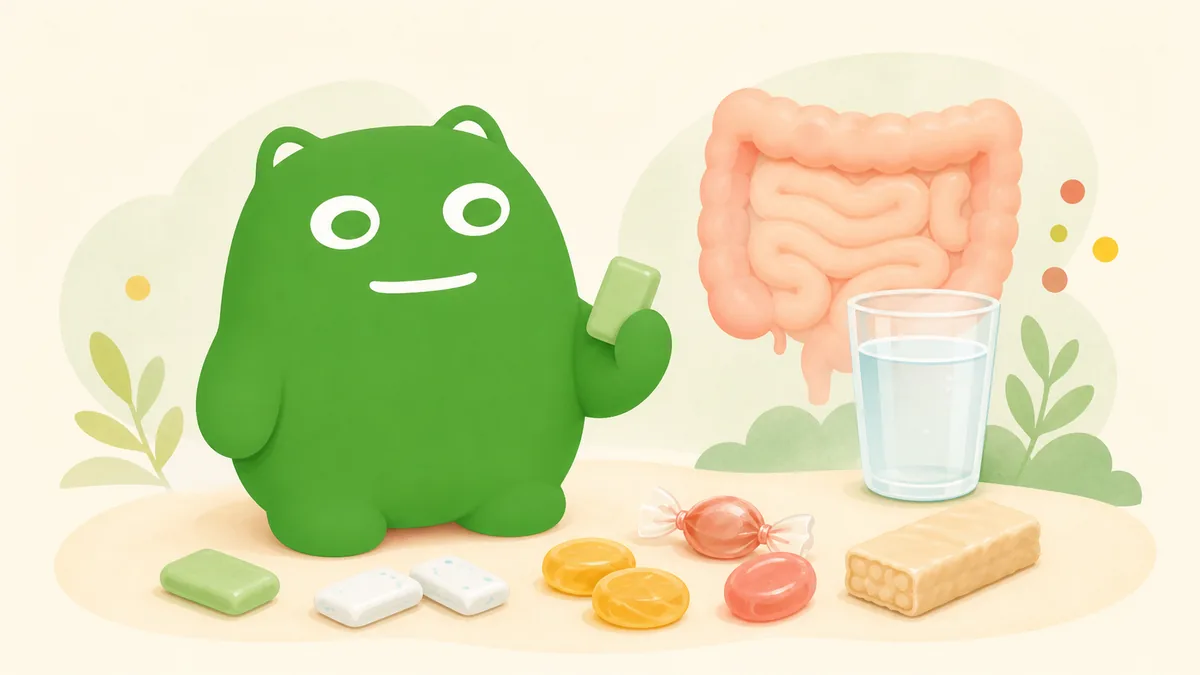
Sugar alcohols can cause diarrhea because some of them are absorbed incompletely. The unabsorbed portion holds water in the intestine and becomes fuel for gut bacteria. The result may be gurgling, gas, cramps, urgency, or loose stool, often depending on the product and amount.
What sugar alcohols are
Sugar alcohols are carbohydrates used to sweeten foods with less sugar. Despite the name, they are neither table sugar nor drinking alcohol. Common names include sorbitol, mannitol, xylitol, maltitol, lactitol, isomalt, erythritol, and hydrogenated starch hydrolysates.
They appear frequently in sugar-free gum and candy, low-sugar chocolate, protein bars, baked goods, drink powders, supplements, toothpaste, and some liquid medicines. A package may advertise no added sugar while still containing several sugar alcohols, so the ingredient list matters.
Why they can trigger loose stool
The small intestine may not absorb a sugar alcohol completely. Molecules left in the gut draw in water, which can soften stool or cause watery diarrhea. Gut bacteria also ferment some of the remaining carbohydrate and produce gas. Sensitivity varies by person, type, serving size, and whether several products are eaten close together.
Sorbitol and mannitol are also FODMAPs, fermentable carbohydrates that can trigger symptoms in some people with irritable bowel syndrome. Erythritol is absorbed differently and may be better tolerated by some people, but no sweetener is symptom-free for everyone.
A dose effect is common. One piece of gum may cause no problem, while repeated gum, candy, a protein bar, and a sweetened drink in the same afternoon can add up. Product serving sizes may also be smaller than the amount actually eaten.
How to identify the trigger
Read the full ingredient list and note every sugar alcohol rather than recording only “sugar-free snack.” Record the brand or product type, approximate serving, time eaten, and when symptoms began. Include other likely triggers such as caffeine, alcohol, fatty foods, dairy, illness, antibiotics, or a sudden fiber increase.
Track stool with the Bristol Stool Scale, urgency, cramps, and number of episodes. If symptoms reliably follow one product, avoiding that product for a short period and discussing a careful recheck with a clinician or dietitian may be more informative than removing many unrelated foods.
Do not use repeated diarrhea as a home challenge. People with diabetes should not make broad dietary changes based only on a “sugar-free” label, since sugar alcohol products can still contain other carbohydrates and calories.
What to do during a mild episode
Stop the suspected product and return to ordinary fluids and foods you tolerate. Small, regular sips can help replace fluid losses. Oral rehydration advice may be appropriate for more substantial diarrhea, children, older adults, or people with medical conditions, so ask a healthcare professional when unsure.
Seek prompt care for blood or black stool, high fever, severe abdominal pain, repeated vomiting, faintness, very low urine output, confusion, or other signs of dehydration. Get advice if diarrhea persists, repeatedly returns without a clear food link, or follows recent antibiotics or travel. This article is general information, not medical advice.
How bellySignal helps
bellySignal lets you log food triggers, Bristol stool types 1 through 7, stool color, blood or mucus flags, water intake, and notes. Recording the exact sugar-free product and serving beside the timing of loose stool can reveal a dose-related pattern that memory misses.
Your diary is stored on your device, and no account is required. Selected health values, including stool type, symptoms and manually entered weight, are also sent to PostHog and Firebase Analytics. Both services are enabled by default. The analytics switch controls PostHog only; Firebase Analytics remains active. Privacy policy.
Frequently asked questions
- Which sugar alcohols can cause diarrhea?
- Sorbitol, mannitol, xylitol, maltitol, lactitol, and isomalt can cause digestive symptoms in some people, especially as the amount increases.
- Where are sugar alcohols commonly found?
- They often appear in sugar-free gum, candy, protein bars, low-sugar desserts, drink mixes, supplements, toothpaste, and some medicines.
- How long does sugar alcohol diarrhea last?
- A mild food-related episode often settles after the trigger passes, but duration varies. Seek care for dehydration, blood, fever, severe pain, or diarrhea that persists.
Sources
bellySignal provides general wellness information and does not replace professional medical advice or diagnosis.