
Diarrhea After Spicy Food: Why It Happens
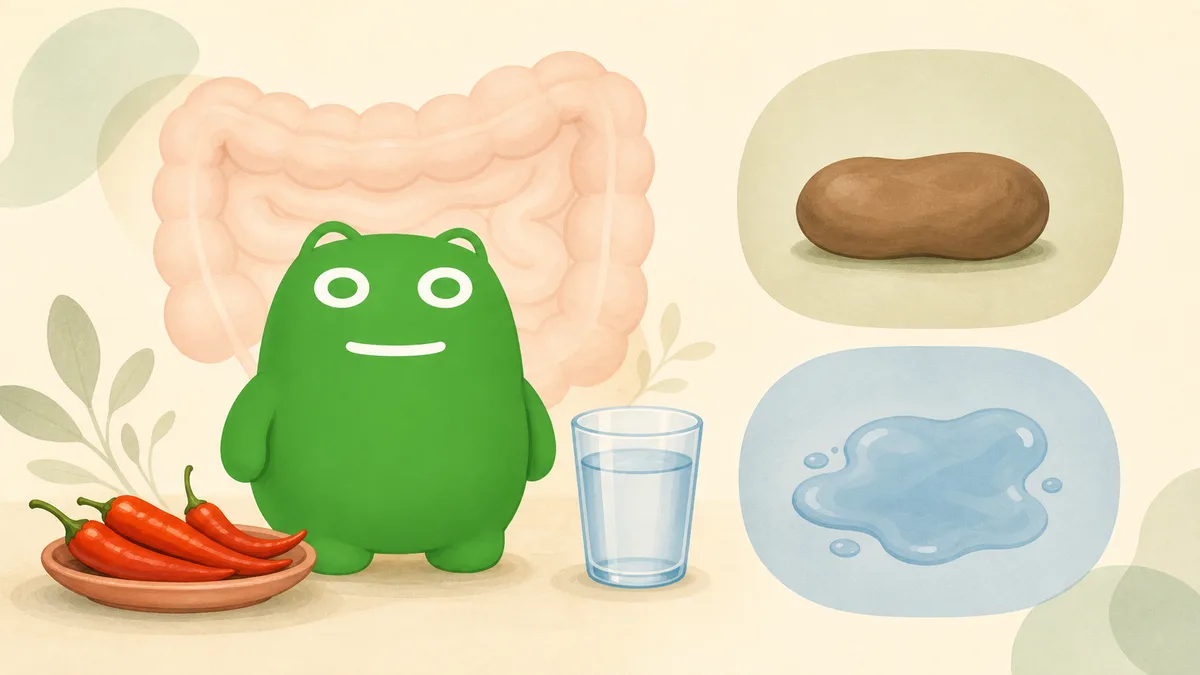
Diarrhea after spicy food usually means your gut reacted to that meal, not that one food has diagnosed a disease. Capsaicin can activate heat and pain sensors in the digestive tract, and some people feel cramping, urgency, burning, or loose stool. The pattern matters most: how often it happens, what else was in the meal, and whether warning signs are present.
Why spicy food can trigger diarrhea
Chili peppers contain capsaicin, the compound that makes them taste hot. It activates nerves that interpret the sensation as heat or burning. In the gut, that sensitivity can feel like cramping, pressure, urgency, or looser bowel movement.
Eating also naturally stimulates the colon. A spicy meal may make that response feel stronger, especially when the gut is already sensitive from stress, poor sleep, recent illness, constipation, travel, or a large late dinner.
The trigger is not always spice alone. Spicy foods often arrive with fat, alcohol, caffeine, carbonation, garlic, onion, dairy, or large portions. Fried spicy chicken, hot ramen, chili with beans, or hot sauce with beer can include several triggers. A repeated pattern is more useful than one episode.
Capsaicin and gut sensitivity
Capsaicin can be tolerated well by many people. For others, it can make normal digestive signals feel louder. That does not prove harm or inflammation. It means the gut may be reacting strongly to the dose, meal mix, or your body state that day.
People with irritable bowel symptoms, reflux, indigestion, or a sensitive gut may notice spicy foods more. Some feel burning high in the abdomen or chest. Others feel lower belly cramps and urgent stool. Describe the symptom, not just “spicy food problem.”
Timing helps. Burning or sour burps soon after eating may fit reflux or indigestion. Cramps and watery stool later may fit a faster bowel response or food intolerance pattern. Symptoms that wake you at night, keep returning, or come with weight loss, fever, or blood should not be treated as a normal spice reaction.
What to do after a mild episode
Start with fluids. Diarrhea can remove water and electrolytes, so take small, steady sips if your stomach feels unsettled. Water is fine for mild symptoms. If diarrhea is frequent or watery, an oral rehydration solution or broth may help. Dark urine, dizziness, dry mouth, weakness, or much less urination can point to dehydration.
For the next meal, choose simple foods that feel easy on your stomach. Avoid testing more spice, alcohol, heavy fat, or large portions while the gut is irritated.
Do not assume you must quit spicy food forever. Try a lower spice level, smaller portion, earlier meal, and separating spice from alcohol, fried foods, or caffeine. Change one variable at a time so you can tell what helped.
Track food, stool, and water
A useful record is specific. Write the food, spice level, portion size, meal time, sauces, fat, dairy, alcohol, caffeine, carbonated drinks, stress, sleep, and recent illness or antibiotics. Then record when symptoms started, stool form, stool color, urgency, pain, nausea, bloating, mucus, and blood.
Use Bristol stool type if possible. A formed stool is different from soft pieces, mushy stool, or watery diarrhea. Also track water intake across the day. Low fluid intake may make recovery harder and urine darker.
After a few entries, compare meals. If very hot meals cause urgency, spice dose may matter. If symptoms appear only with spicy fried foods, fat may be part of the pattern. If dairy, beer, coffee, or stress show up every time, note that too.
When recurrence needs care
Get prompt medical help for blood in stool, black or tarry stool, severe or worsening abdominal pain, high fever, repeated vomiting, fainting, confusion, dehydration signs, or inability to keep fluids down. Also seek care if diarrhea lasts more than a couple of days, returns often after spicy meals, wakes you from sleep, or comes with unexplained weight loss.
This article is general information, not medical advice. A clinician can check for infection, medication effects, inflammatory bowel disease, irritable bowel syndrome, food intolerance, and other causes when symptoms do not behave like a brief food reaction.
How bellySignal helps
bellySignal helps you turn a vague memory into a clear timeline. You can log Bristol type, stool color, blood or mucus, water intake, food triggers, and notes, along with urine color as a hydration clue. That makes it easier to see whether diarrhea follows capsaicin itself, a certain spice level, fried food, alcohol, caffeine, low water, or a recurring combination.
Your diary is stored on your device, and no account is required. Selected health values, including stool type, symptoms and manually entered weight, are also sent to PostHog and Firebase Analytics. Both services are enabled by default. The analytics switch controls PostHog only; Firebase Analytics remains active. Privacy policy.
Frequently asked questions
- Why does spicy food give me diarrhea?
- Capsaicin can stimulate heat and pain nerves in the digestive tract and may speed gut movement in sensitive people, leading to cramps, urgency, or loose stool.
- Should I stop eating all spicy food?
- Not always. If symptoms are mild, try a smaller portion, lower spice level, less greasy pairing, and better hydration before deciding whether a specific food needs to be avoided.
- When should diarrhea after spicy food be checked?
- Get medical advice for blood or black stool, fever, severe or worsening pain, dehydration signs, unexplained weight loss, diarrhea lasting more than a couple of days, or repeated episodes.
Sources
bellySignal provides general wellness information and does not replace professional medical advice or diagnosis.